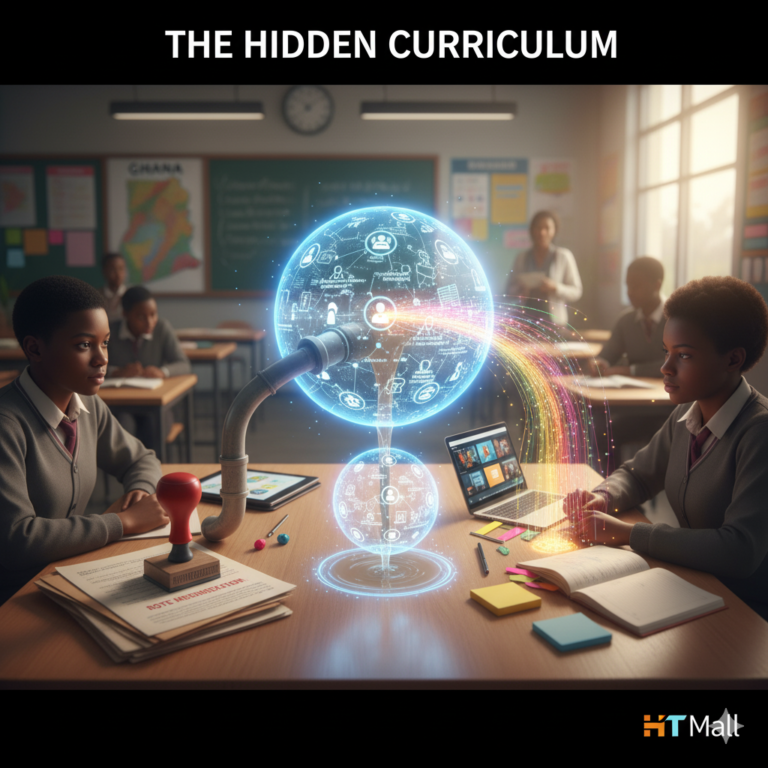
How Citizenship Education is Powering Ghana’s Development Journey
Shaping Tomorrow: How Citizenship Education is Powering Ghana’s Development Journey
Ghana, often hailed as a beacon of democracy in West Africa, is on an exciting journey of development. But what truly fuels this progress? It’s not just economic policies or grand infrastructure projects. At its heart, it’s about people–informed, engaged, and responsible citizens. This is where citizenship education (CE) steps in, playing a pivotal role in shaping Ghana’s democratic consolidation, social cohesion, and sustainable growth.
Think of citizenship education not as a dry subject in a textbook, but as the very fabric that weaves us together as a nation. It’s about empowering individuals to be active players in Ghana’s story, not just spectators.
What Exactly is Citizenship Education?
Simply put, citizenship education is the process – whether it’s in our classrooms, our communities, or even through our families – that equips us with the knowledge, skills, values, and attitudes to be active and responsible members of our society (Young Citizens, n.d.). For a nation like Ghana, still navigating the complexities of post-colonial development, CE is our secret weapon against weak governance, ethnic divisions, and inequality (Abdi, Ellis, & Shizha, 2005).
In a Ghanaian context, this means:
-
Understanding our Constitution: Knowing our rights and responsibilities as enshrined in the 1992 Constitution.
-
Civic Skills: Learning how to effectively voice our opinions, engage in community dialogues, and participate in local governance structures like our District Assemblies.
-
National Values: Embracing patriotism, tolerance, respect for our diverse cultures and traditions, and a shared commitment to the Ghanaian spirit of “Yɛn ara asase ni.”
The Human Touch: How CE Directly Impacts Ghanaian Lives and Progress
Let’s look at how this plays out in the daily lives and development trajectory of Ghana:
1. Building a Stronger, More Accountable Democracy
We’ve all heard the phrase: “Be a citizen, not a spectator.” This isn’t just a catchy slogan; it’s the very essence of what the National Commission for Civic Education (NCCE) strives for in Ghana (Donkor, 2024).
Imagine a young Ghanaian, learning about the local government elections. Through CE, they don’t just know when to vote, but why their vote matters, how to research candidates, and how to hold their elected officials accountable for promises made during campaigns (Finkel, 2014; Mainde & Chola, 2020). This deeper engagement means:
-
Informed Choices: When citizens understand the issues, they make better decisions at the ballot box.
-
Fighting Corruption: An informed citizenry is less likely to tolerate or engage in corruption, understanding its detrimental impact on our national resources and collective future (Ackah, 2023; Donkor, 2024). Think of the local resident who challenges a dubious land deal because they understand their rights and the proper legal procedures.
-
Peaceful Dialogue: Ghana’s multi-party democracy thrives on dialogue. CE teaches us how to debate, discuss, and find common ground on national issues, even when we disagree, fostering political stability (Chanda, 2024; Donkor, 2024).
2. Weaving a Tapestry of Social Harmony and Inclusivity
Ghana is a nation of diverse ethnic groups – from the Akans to the Ewes, the Dagombas to the Gas. While this diversity is a source of immense richness, it can also be a challenge if not properly managed.
-
Celebrating Our Differences: CE in Ghana teaches us to appreciate the beauty of our varied cultures, traditions, and languages. It cultivates tolerance and mutual respect, helping to bridge any divides and prevent conflicts that can derail development (Amedeker, 2020; Waghid, 2018). It’s about understanding that while our languages or customs may differ, we are all Ghanaians.
-
“Love Your Neighbour”: This value, deeply embedded in many Ghanaian cultures, is reinforced through CE. It promotes a sense of shared responsibility and community spirit, encouraging active participation in local initiatives – whether it’s a community clean-up exercise in Jamestown or volunteering to mentor young people in Kumasi.
-
Standing Up for Others: By teaching about human rights, CE empowers us to speak out against injustice and ensure that development benefits everyone, especially the most vulnerable in our society (Center for Civic Education, 2001).
3. Driving Sustainable Growth and Embracing Global Citizenship
In today’s interconnected world, Ghana’s development isn’t just about what happens within our borders. Our actions have global implications, and global issues affect us.
-
Skills for the Future: Ghana’s education reforms, like the Common Core Programme (CCP), are integrating Global Citizenship Education (GCE) to equip our youth with skills for the 21st century: critical thinking, innovation, and problem-solving (Chubb, Adewale, & Jarvis, 2024). These are the skills that will drive our economy forward, whether it’s in technology, agriculture, or entrepreneurship.
-
Our Shared Planet: CE helps us understand our role in addressing global challenges like climate change. A Ghanaian farmer, educated on sustainable practices, contributes not only to local food security but also to the global effort against environmental degradation (UNESCO, 2020).
-
Good Conduct, Good Business: By fostering honesty and accountability, CE indirectly improves our business environment. When corruption is minimized, foreign investors feel more confident, and local businesses can thrive without unfair practices (Ackah, 2023).
The Road Ahead: Challenges and What We Can Do
Despite its immense importance, citizenship education in Ghana, like in many parts of Africa, faces hurdles.
| Challenge | What We Can Do (Ghanaian Context) |
| Lack of Trained Teachers | The Ministry of Education and teacher training colleges must prioritize specialized training for CE teachers (Donkor, 2024). |
| Limited Resources | Provide the NCCE, schools, and community centers with more teaching materials, resources, and funding to reach every corner of Ghana (Donkor, 2024). |
| Surface-Level Learning | Move beyond simply memorizing facts. Let’s delve into real-life discussions about local challenges – like galamsey (illegal mining) or chieftaincy disputes – and how civic principles apply (Ackah, 2023; Waghid, 2018). |
| Passive Teaching Methods | Encourage interactive learning! Let’s organize mock District Assembly meetings, school debates on national issues, and community service projects where students actively practice civic engagement. (Generation Citizen, 2015). |
In Conclusion
Citizenship education is more than just learning about government; it’s about nurturing the soul of a nation. For Ghana to truly develop, to be prosperous, equitable, and democratic, we need a citizenry that is not only knowledgeable but also deeply committed to the common good. It’s an investment in every Ghanaian – in our children, our communities, and the bright future we are all building together.
References (APA 6th Edition)
Abdi, A. A., Ellis, G. F., & Shizha, E. (2005). Democratic development and the role of citizenship education in sub-Saharan African with a case focus on Zambia. Scholars Commons @ Laurier. Retrieved from https://scholars.wlu.ca/cgi/
Ackah, B. B. (2023). Teachers and pupils’ perceptions of teaching citizenship education in basic schools in Tema Metropolis. University of Cape Coast Institutional Repository. Retrieved from https://ir.ucc.edu.gh/xmlui/
Amedeker, M. K. (2020). Ghana citizenship education: A review from the perspective of national education policy and learning models. Journal of Education and Learning, 1(1), 1-10. Retrieved from [no direct link found for this citation, cited in internal reference for other content]
Center for Civic Education. (2001). The role of civic education. Retrieved from https://civiced.org/papers/
Chanda, M. (2024). Evaluating the effectiveness of civic education in enhancing voter participation and political engagement. International Journal of Research and Innovation in Social Science, 8(10), 875-885.
Chubb, L. A., Adewale, D., & Jarvis, K. (2024). Integrating global citizenship education into Ghana’s Common Core Programme: Pathways to empowering 21st century learners. African Journal of Educational Research and Netwerk, 2(4).
Donkor, J. (2024). Teaching citizenship education in Ghana basic schools: The quest to achieve patriotism and democracy. International Journal of Educational Development in Africa, 1(1), 1–11.
Finkel, S. E. (2014). The impact of adult civic education programmes in developing democracies. Public Administration and Development, 34(3), 169–181.
Generation Citizen. (2015). Action civics: For promoting civic development. Retrieved from https://www.generationcitizen.
Mainde, C., & Chola, C. (2020). The role of civic education in enhancing voter participation in Zambia. International Journal of Social Science and Education, 10(2), 22-35.
UNESCO. (2020). Education for sustainable development: A roadmap. Retrieved from https://unesdoc.unesco.org/
Waghid, Y. (2018). Democratic citizenship education for Ubuntu in African universities. International Journal of Research and Innovation in Social Science, 2(10), 1-10.
Young Citizens. (n.d.). What is citizenship? Retrieved from https://www.youngcitizens.org/