The Three Pillars of Assessment: AfL, AaL, & AoL
🎓 The Three Pillars of Assessment: AfL, AaL, & AoL for a Holistic Social Studies Classroom
In the vibrant landscape of modern education, assessment is far more than just a final grade. It’s a continuous, multifaceted process crucial for student growth and instructional effectiveness. For Social Studies educators, understanding the distinct yet interconnected roles or pillars of Assessment for Learning (AfL), Assessment as Learning (AaL), and Assessment of Learning (AoL) is key to building a truly dynamic and responsive classroom.
These three approaches represent different methodologies, each with unique characteristics, purposes, and powerful applications that can transform how we teach and how students learn about the world around them.
🧭 Assessment for Learning (AfL): Guiding the Journey
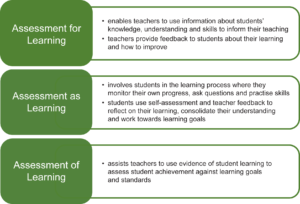
AfL is the heartbeat of formative assessment, happening during the learning process. It’s about gathering real-time information to guide and adjust both teaching and learning, rather than just judging it.
Key Characteristics:
-
Formative and Ongoing: AfL is primarily formative, focusing on the feedback provided throughout the learning journey. It’s less about a score and more about progress.
-
Continuous Feedback Loop: This assessment involves consistent, actionable feedback given to students, allowing them to understand where they are, where they need to go, and how to get there. It also helps teachers adapt their instruction.
-
Learner-Centric and Growth-Oriented: AfL actively involves students in their learning, encouraging a growth mindset by showing them that learning is a process of continuous improvement.
Purpose in the Classroom:
The core purpose of AfL is to inform educators and students about learners’ current understanding of the material while it is being taught. It aims to quickly identify areas where students may be struggling or excelling, allowing teachers to adapt instruction accordingly and provide targeted support or extension activities.
Powerful Applications in Social Studies:
-
Dynamic Group Discussions: After a lesson on Ghana’s independence movement, a teacher might facilitate a group discussion where students share their interpretations of Kwame Nkrumah’s legacy. This discussion serves as a rich formative assessment, allowing the teacher to immediately gauge comprehension, address misconceptions, and clarify complex historical narratives.
-
Interactive Quizzes or Exit Tickets: At the end of a class exploring current civic issues, students could complete a quick digital quiz (e.g., using Kahoot!) or an “Exit Ticket” asking them to summarize one key takeaway and one lingering question. This offers immediate, actionable feedback for both students (seeing their understanding) and teachers (informing the starting point of the next lesson).
-
Think-Pair-Share: When introducing a complex economic concept like inflation, asking students to Think-Pair-Share their initial thoughts can reveal a wide range of prior knowledge and misconceptions, enabling the teacher to tailor their explanation more effectively.
🤝 Assessment as Learning (AaL): Empowering Self-Regulation
AaL takes assessment a step further, placing the student at the center of the evaluative process. It’s about developing learners’ metacognitive skills – their ability to think about their own thinking and learning.
Key Characteristics:
-
Metacognitive Focus: AaL emphasizes the learner’s active role in assessing their own understanding, strategies, and learning processes to promote self-regulation and independent learning.
-
Reflection and Goal-Setting: Students are prompted to reflect deeply on their learning experiences, identify their strengths and weaknesses, and set concrete goals for improvement based on their self-assessment.
-
Ownership and Autonomy: This approach encourages students to take genuine ownership of their learning by actively engaging in the assessment process, fostering a sense of agency over their academic journey.
Purpose in the Classroom:
The primary purpose of AaL is to develop learners’ capacity for self-monitoring and critical reflection, thereby fostering essential lifelong learning skills. It helps students not just understand what they know, but how they learn best and what steps they need to take to bridge their own learning gaps.
Engaging Applications in Social Studies:
-
Self-Assessment Checklists for Civic Responsibility: After a unit on civic responsibility and democratic governance, students might complete a detailed self-assessment checklist. They evaluate their understanding of key concepts (e.g., rule of law, human rights) and reflect on their personal engagement with these themes, encouraging deeper personal reflection rather than just factual recall.
-
Learning Journals/Portfolios with Reflection: Students can maintain a learning journal throughout a course on Ghanaian history and culture. Regularly, they note what they have learned, articulate lingering questions, identify challenges, and set future learning goals. This journal becomes a powerful tool for continuous self-assessment and metacognitive reflection on their evolving understanding.
-
Peer Review with Specific Rubrics: When students review each other’s argumentative essays on historical debates, they are not only providing feedback (AfL) but also internalizing the criteria for quality work and applying it to their own understanding (AaL).
🏆 Assessment of Learning (AoL): Measuring the Achievement
AoL is the traditional, summative form of assessment, designed to evaluate what students have learned and mastered at the end of a significant teaching period. It’s the “report card” of the learning process.
Key Characteristics:
-
Summative and Evaluative: AoL is typically summative, providing a definitive evaluation of student learning against established standards at the conclusion of a unit, term, or course.
-
Standardized Measurements: Often involves formal assessments, such as standardized tests, final exams, or major projects, for objectively evaluating student performance.
-
Outcomes-Focused: Primarily measures the learning outcomes achieved, demonstrating the extent to which students have met the curriculum objectives.
Purpose in the Classroom:
The core purpose of AoL is to provide a comprehensive measure of student learning that can be used for reporting to stakeholders—students themselves, parents, school administrators, and educational authorities. It also serves to evaluate the effectiveness of educational programs and curriculum, providing data for accountability and future planning.
Structured Applications in Social Studies:
-
Comprehensive Final Exams: A final exam at the end of a semester typically tests students on their cumulative understanding of significant historical events, key geographical concepts, current civic issues, and economic principles related to Ghana and beyond. This serves as a broad gauge of overall student learning against the curriculum objectives.
-
Major Project-Based Assessments: Students could culminate a multi-week unit on “Global Issues and Ghana’s Role” by submitting a research project or a detailed presentation on a chosen topic. This allows for the demonstration of synthesized knowledge, research skills, and critical analysis developed over the unit.
-
Cumulative Portfolio Assessments: Students might compile a selection of their best work throughout the entire course—including essays, research papers, project reports, and reflections—which is then formally assessed to provide an overall measure of their learning achievements and growth.
Synthesizing the Approaches: A Holistic Framework
While distinct, AfL, AaL, and AoL are most powerful when integrated into a holistic assessment framework.
-
AfL provides continuous, real-time adjustments.
-
AaL empowers students to become independent, reflective learners.
-
AoL offers the crucial endpoint measurement and accountability.
In Social Studies education, effectively implementing a mix of these approaches is crucial for creating an environment that not only monitors growth and measures achievement but also actively encourages self-regulation, critical thinking, and a deeper, more engaged understanding of our complex world.
By thoughtfully integrating these assessments into their practice, educators can provide a rich, supportive, and effective learning environment that truly aligns with students’ needs and the overarching objectives of the Social Studies curriculum, ultimately fostering a more informed and active citizenry for Ghana’s future.
HT Mall champions educational strategies that empower both teachers and students. Explore our resources to enhance your assessment practices!